
Upgrade Your Kitchen Without Regretting Your Countertops
Wood countertops for the kitchen are popular for a reason. They feel warm, look inviting, and make a kitchen island or bar top feel more like a gathering spot than a work zone. As people plan summer remodels and think about fresh cabinets and new layouts, wood and butcher block tops often move to the top of the wish list.
But choosing wood is not just about picking a pretty slab and a stain color. If you skip a few key details, you can end up with tops that stain too fast, move too much, or simply do not fit how you cook and live. In this article, we will walk through the most common mistakes we see homeowners make and how to avoid them.
At The Southside Woodshop in Portsmouth, VA, we design and fabricate custom solid wood and butcher block countertops every day, and we see what works long-term. Success with wood countertops starts long before the samples hit the kitchen table. It starts with how you use your space.
Overlooking How You Actually Use Your Kitchen
One big mistake is choosing wood countertops for the kitchen based only on looks. A glossy picture might sell you on a thick walnut island, but your daily habits should make the final call.
Ask yourself:
- Do you bake or cook heavy meals most nights?
- Do kids do homework and crafts at the island?
- Do you host big groups, with people leaning and setting drinks everywhere?
A busy family kitchen might need a tougher construction style, a slightly thicker top, and a forgiving finish that can be touched up. A low-use show kitchen can focus more on a sleek surface and a more delicate edge profile.
Another issue is not planning clear zones. Wood does not have to be the same everywhere. For many layouts, it works better to:
- Use a butcher block island or section for chopping and prep
- Use a smoother walnut or white oak top on the seating side of the island
- Pair wood with stone or quartz near the range or heavy splash areas
Mixing materials can give you the warmth of wood where you see and touch it most, and a different surface where heat and water are constant.
Homeowners also tend to forget long-term wear patterns. Think about:
- Where people naturally stand or walk
- Where bar stools will sit and swivel
- Where hot pans usually land when they leave the oven
These spots might call for thicker tops, harder species, or a more protective finish. This is where involving a fabricator early helps. We can look at your layout and talk about overhangs, support brackets, and the smartest places for seams so your tops hold up over time.
Picking the Wrong Wood Species for the Job
Another common mistake is picking a species only for color. Walnut, maple, and white oak are all beautiful, but they behave differently.
For example:
- Maple is light in color, tight grained, and great for heavy prep
- Walnut is rich and dark, and many people love it for serving and seating areas
- White oak brings a classic look and can bridge modern and traditional styles
Softer woods or very rustic boards with deep texture can look charming but may dent more easily or trap crumbs in a busy kitchen. That can be frustrating when you are wiping down the island three times a day.
Grain style and construction are just as important as species. In butcher block, you will often hear:
- Face grain: wide boards, more natural wood pattern, often used for statement islands
- Edge grain: long, narrow strips, stable and smooth, great for work surfaces
- End grain: small blocks with grain facing up, very durable for heavy chopping zones
Tighter-grained woods like maple in edge or end grain are a solid choice for active prep zones. Walnut face grain might shine as a warm, elegant top for the perimeter or bar where people mostly sit and serve.
You also want to think beyond the counter and look at the rest of your home. Wood that is too red, too yellow, or almost black can clash with floors, cabinets, or trim. We always suggest:
- Getting real samples of your short list
- Looking at them next to your cabinets and floors
- Checking them in morning and evening light
Stained vs natural finishes can also change how everything ties together.
Underestimating Moisture, Heat, and Seasonal Movement
Another big mistake is treating wood like stone or quartz. Wood is a natural material. It responds to humidity, especially in places that shift from hot and sticky summers to dry indoor heat in cooler months.
This means your tops need:
- The right construction and fastening methods
- Space to expand and contract a bit
- Proper support on long island tops
Ignoring these basics can lead to cracks, warping, or gaps. A professional fabricator will plan for movement from the start, so your tops have room to breathe without coming loose.
Wet areas are another weak spot when they are not planned correctly. Around sinks, faucets, and dishwashers, water can sit, drip, or steam. These zones need:
- Strong sealing and smart finish choices
- Drainage planning so water does not pool against the wood
- Species and construction that handle some moisture better
If these details are missed, you might see staining, swelling, or seams that start to show.
Heat and small appliances add their own trouble. Hot pots, slow cookers, and coffee makers left in one spot can discolor the surface or dry it out. It often helps to:
- Use built-in or loose trivets near the range
- Create an appliance zone on a non-wood surface
- Keep very hot items off the same wood spot day after day
With a little planning, wood can stay beautiful while still being part of a real working kitchen.
Cutting Corners on Finish, Sealing, and Care
Finish is where many homeowners try to rush, and it shows later. Different finishes change both the look and the care routine.
In general:
- Oil finishes are warm and easy to refresh, good for people who do not mind occasional upkeep
- More protective film-forming finishes give a tougher barrier, better for those who want less frequent touch-ups
The right choice depends on how you treat your kitchen, not just how it looks on day one.
Skipping a realistic care plan is another mistake. Regular care usually means:
- Wiping spills soon instead of letting them sit
- Using a soft cloth, not harsh scrub pads
- Avoiding strong chemical cleaners
- Doing light re-oiling or touch-ups when the surface starts to look dry
Seasonal checks help too. A quick look for any raised grain or dry patches lets you act early instead of waiting for bigger problems.
Finally, some people try DIY shortcuts on sealing, sanding, or installation. With wood countertops for the kitchen, small errors can turn into movement, rough spots, or finish problems. Working with a specialist who understands species selection, joinery, and kitchen finishing methods helps your tops last and look good.
Design Details That Make Wood Shine
Even when homeowners get species and finish right, they sometimes miss design details that could make their wood tops really stand out.
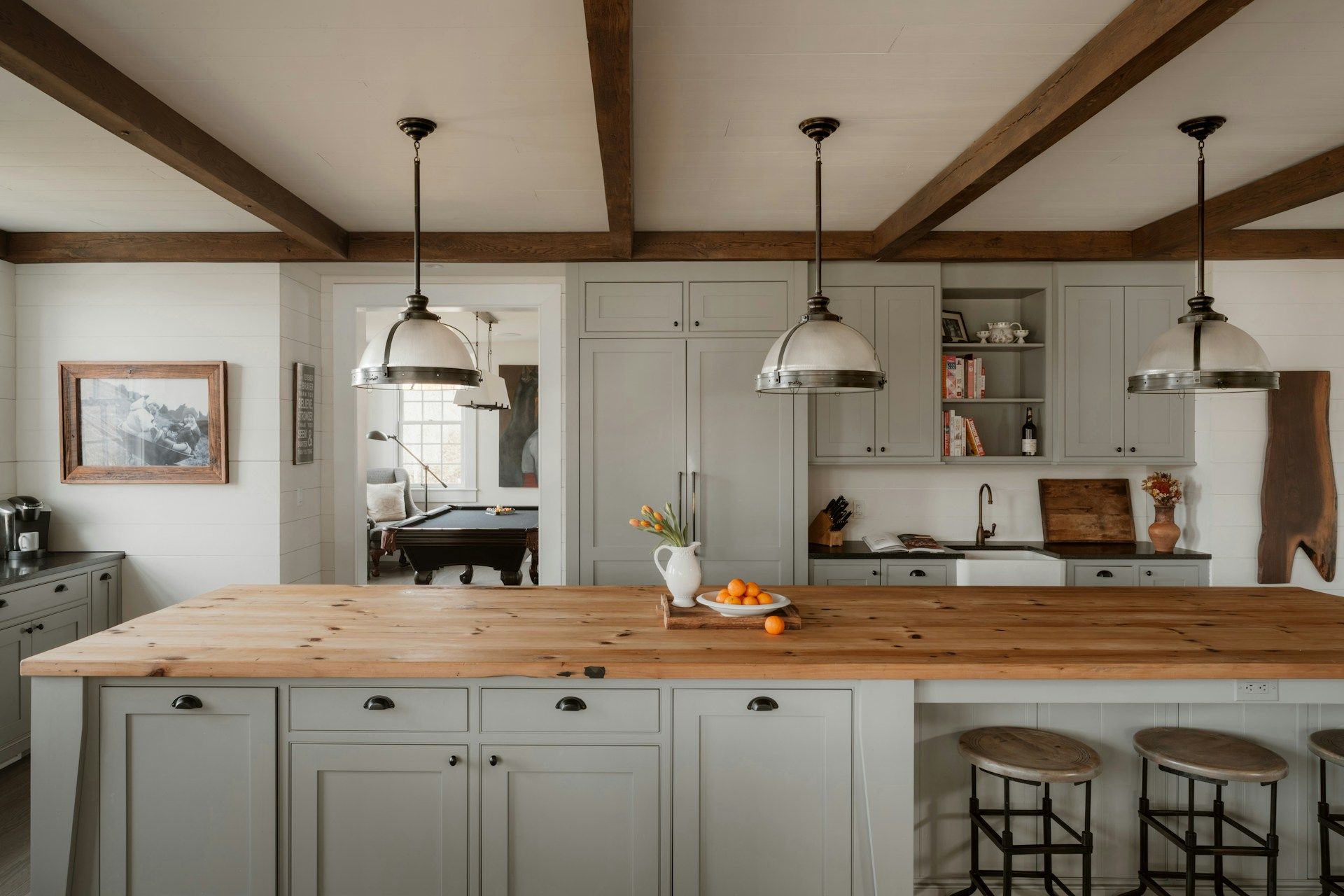
Not every countertop needs to match. A kitchen island can be a statement piece with:
- A thicker top than the perimeter counters
- Waterfall ends that run down to the floor
- A contrasting wood species that pulls the whole room together
Using wood on the island and a different material on the perimeter can warm up a cooler space filled with tile, metal, and paint.
Edges, overhangs, and appliances also matter more than people expect. Edge profiles, like a simple eased edge, a small bevel, or a more detailed ogee, change how the top feels under your arms when you lean or dine at a bar. Overhang depth affects comfort and how much support you need from brackets or corbels.
We also like to look at where appliances sit, so seams and grain direction work with your layout instead of fighting it.
If you are thinking about resale, classic choices often win. Neutral, timeless grains on the larger surfaces keep your options open, while bolder wood tones or patterns can show up on smaller accents, shelves, or furniture pieces. That balance lets you enjoy a custom look now and still appeal to future buyers later.
When you avoid these common mistakes in layout, wood choice, finish, and care, your wood countertops become a long-term win, not a short-lived trend.
Get Started With Your Project Today
If you are ready to bring warmth and character to your kitchen, we are here to help you plan every detail. At The Southside Woodshop, we work closely with homeowners to design and craft custom wood countertops for the kitchen that fit their style, space, and daily use. Tell us about your project, and we will guide you through wood species, finishes, and edge profiles so you feel confident in every choice. Let’s turn your ideas into a countertop you will enjoy for years.
Share Article
Our Latest Spotlight!