
2026 Buyer's Guide: Kitchen Island Wood Countertop Trends
By Jud Dinsmore, Founder, The Southside Woodshop
July 21, 2026
Why the Island Is Where Wood Goes First
The kitchen island has become the place where homeowners bring wood into the kitchen. According to the National Kitchen and Bath Association's 2026 Kitchen Trends Report, wood grain has surpassed painted cabinets, with 59% of design professionals identifying it as growing in popularity, and white oak ranked the most popular wood type at 51% (NKBA | KBIS, 2026)
This guide covers what The Southside Woodshop has learned building luxury
wood kitchen countertops since 2008: which species suit an island, how construction style changes performance, what thickness and overhang decisions matter for seating, and how finish choice determines both the look and the upkeep.
Choosing a Species: Walnut, White Oak, or Maple
Three species account for most of the island tops leaving our Portsmouth, Virginia shop. Beyond these three, The Southside Woodshop builds island tops in 18 domestic and imported species, from American Cherry and Hickory to Sapele Mahogany and Zebrawood. See the
full species selection to start with design ideas.
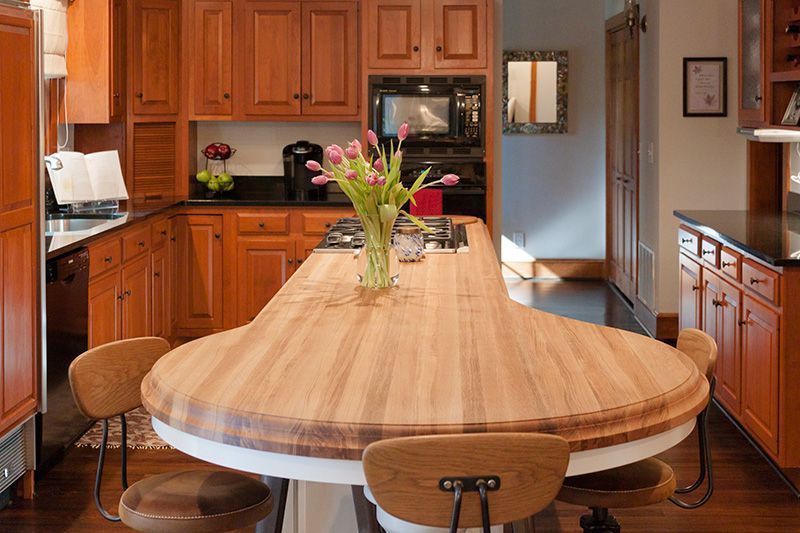
White Oak
White oak is the wood of the moment. It was named the most popular wood type by 51% of respondents in the NKBA's 2026 report, and it earns the attention: it is a dense, hard-wearing wood that shrugs off the bumps and spills of daily kitchen life, with a neutral tan color that fits both modern and traditional rooms. Quartersawn white oak, which The Southside Woodshop also offers, adds distinctive ray fleck figure for a more custom look.
Best for: buyers who want the current designer-specified look with excellent durability.
Walnut (American Black)
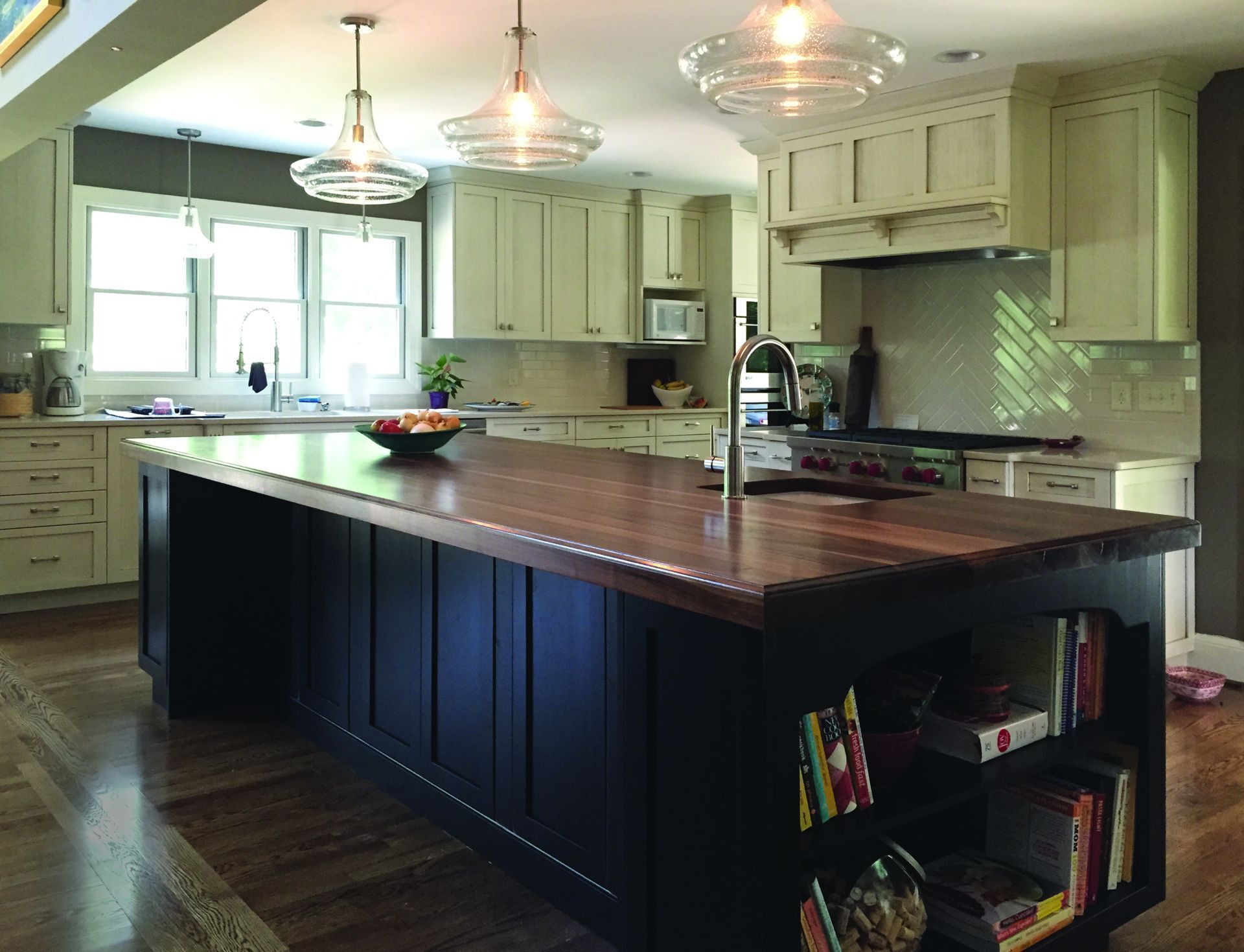
Walnut is the premium pick. Its deep chocolate tones darken a room in the best way, pairing especially well with white or light-painted perimeter cabinets. It is somewhat softer than white oak, which matters less than most buyers expect: an island top takes far more glancing contact than concentrated wear, and the occasional dent in walnut can be steamed or sanded out during refinishing.
Best for:
statement islands and high-end two-tone kitchens where contrast is the goal.
Hard Maple
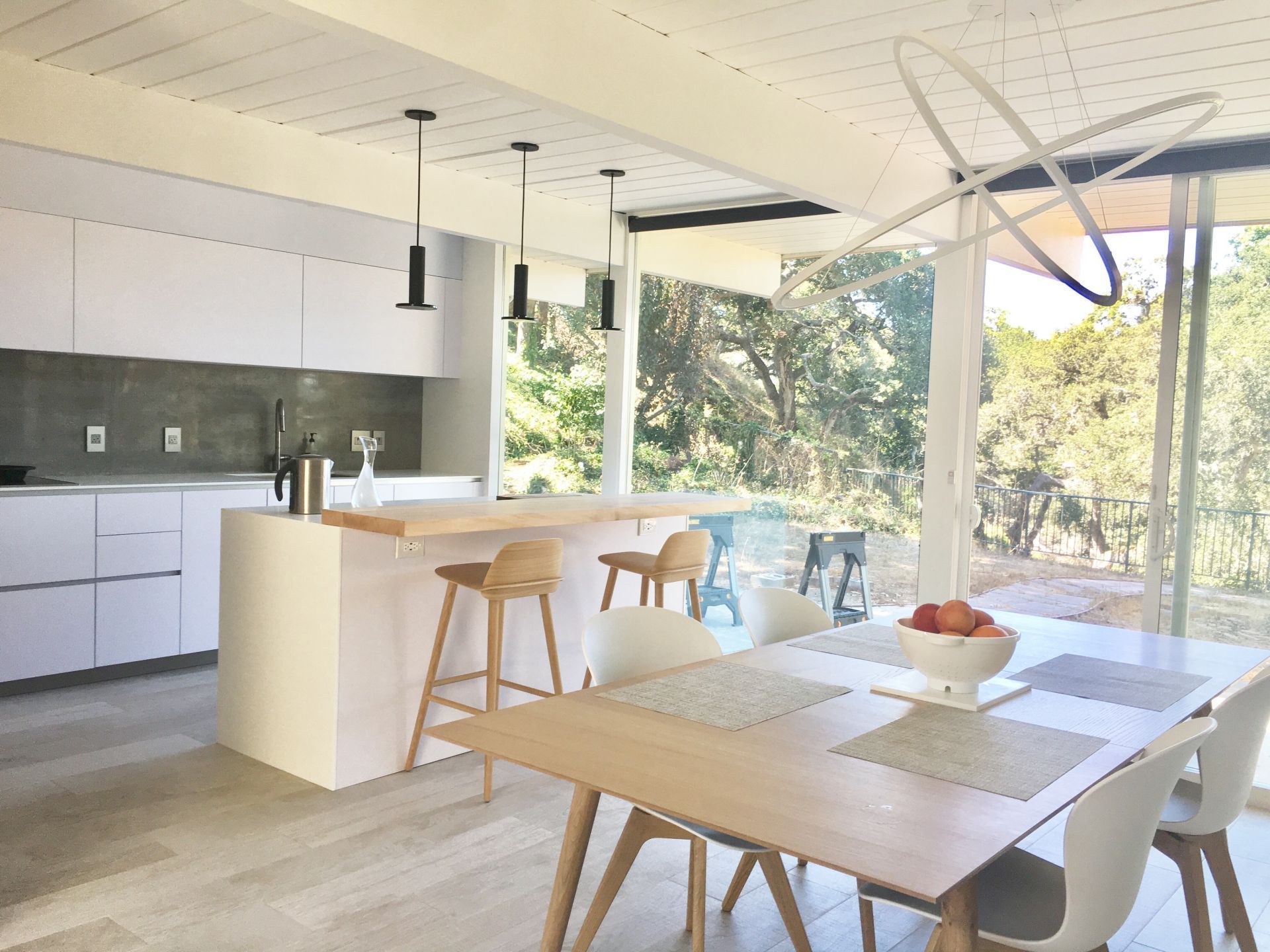
Hard maple is the classic butcher block wood and the workhorse of the three. It is the hardest and most wear-resistant of the group, light and consistent in color, and typically the most budget-friendly domestic option. There is a reason commercial kitchens and butcher shops have run on maple blocks for generations: it takes decades of daily use and can be resurfaced again and again. Maple is the traditional choice for end grain chopping surfaces.
Best for: working islands, baking stations, and buyers who want brightness without paint.
Construction Style Changes Everything
The same species performs differently depending on how the top is built. The Southside Woodshop builds all three constructions:
Flat grain shows the widest, most natural-looking boards, in 1.25" to 2.5" thicknesses. It is the furniture look: long planks, continuous grain, the style most photographed in two-tone kitchens.
Edge grain turns boards on edge in strips running the full length of the top, in thicknesses from 1.25" up to 6". It is more stable than flat grain and a strong choice for larger islands.
End grain is the true butcher block: a checkerboard of upturned wood fibers, 2.25" to 6" thick. Knife edges slip between the fibers instead of cutting across them, which is why end grain is the standard for serious prep surfaces. It is the most labor-intensive construction and the most expensive, and it turns an island into a genuine workstation.
As kitchens take on more functions (the NKBA report found dedicated beverage areas, eat-in layouts, and storage-packed islands leading the list of lifestyle features), the end grain island top has become the centerpiece of kitchens that actually cook.
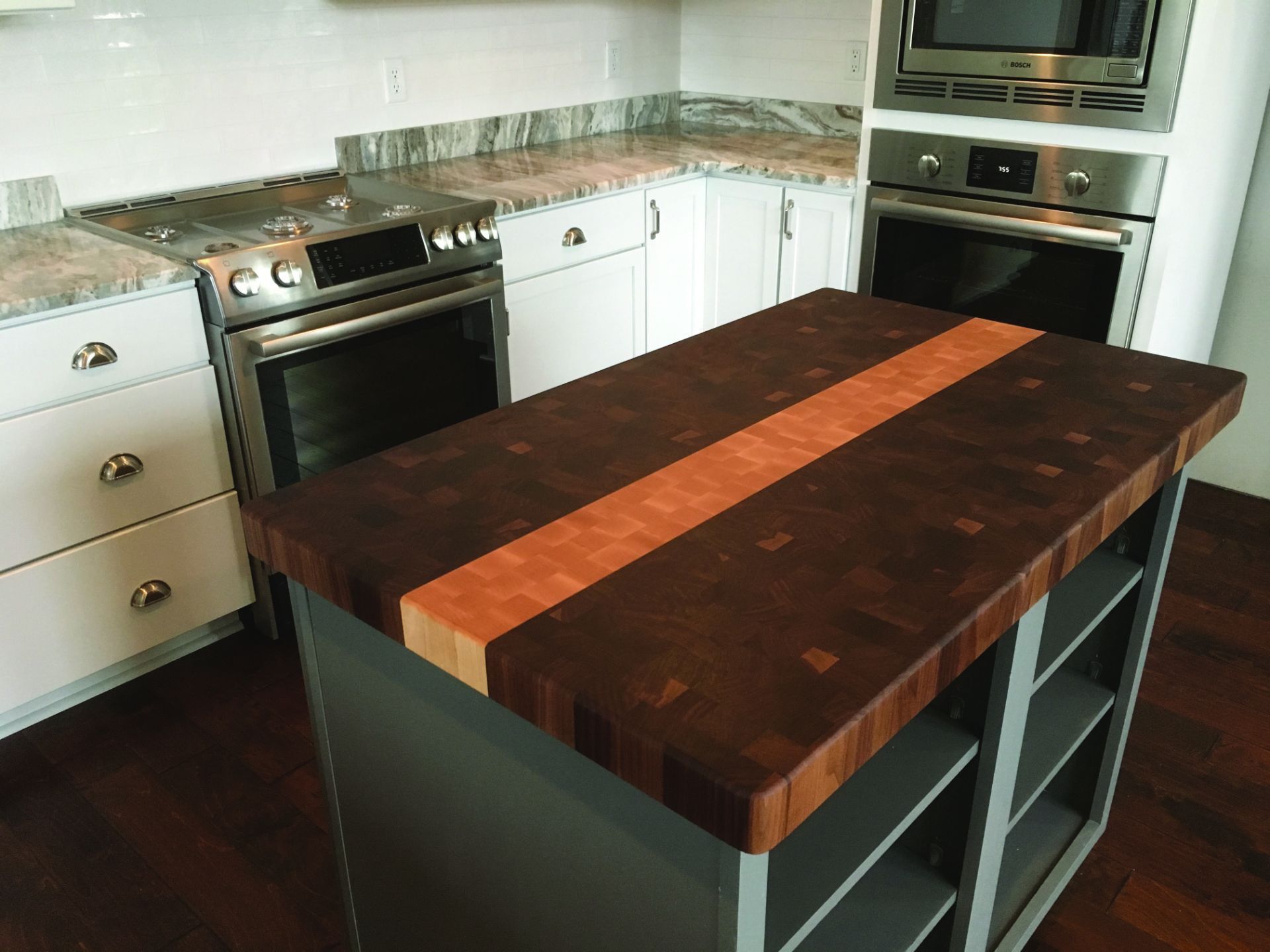
Thickness, Overhangs, and Seating
Standard flat grain tops ship at 1.5" thick, and most island designs look and perform well there. Thicker tops (2.5" and up) read more substantial and suit larger statement islands. If the island includes bar seating, the overhang needs planning.
Finish Determines the Look and the Maintenance
The honey-toned, matte wood islands filling design feeds are as much a finish decision as a species decision. Buyers choose between two paths:
- Film finishes (durable topcoats) seal the surface for a low-maintenance top that handles spills and daily life. Not intended for direct cutting.
- Oil finishes keep the surface food-safe and repairable, the traditional treatment for end grain chopping blocks, with periodic re-oiling as the tradeoff.
See
care instructions for more information.
Built for a Lifetime
Every Southside Woodshop countertop is made to order from premium FAS-grade hardwood in our 10,000+ square foot Portsmouth, Virginia shop, typically ships in 2 to 4 weeks, and is backed by a limited lifetime product warranty. All our wood tops ship nationwide in custom-built crates.
Wood sample kits are available for buyers comparing species before ordering.
Start Your Kitchen Island Top Design
Request a quote for a custom kitchen island wood countertop or call
(757) 366-8828. Founder Jud Dinsmore still answers design and construction questions personally.
About the author: Jud Dinsmore founded The Southside Woodshop in 2008 after a career building custom homes, starting with hardwood scraps too beautiful to throw away and a checkerboard cherry-and-maple countertop built for the last home he framed. Eighteen years later, his Portsmouth, Virginia shop builds custom wood countertops, butcher blocks, bar tops, and island tops for homeowners and dealers across the country.