
Build Countertops That Stay Beautiful for Decades
Strong custom wood countertops are not an accident. They are the result of smart design choices that let the wood move without failing. When we plan a countertop, we think about joinery, grain direction, and how the top will expand and shrink through the seasons.
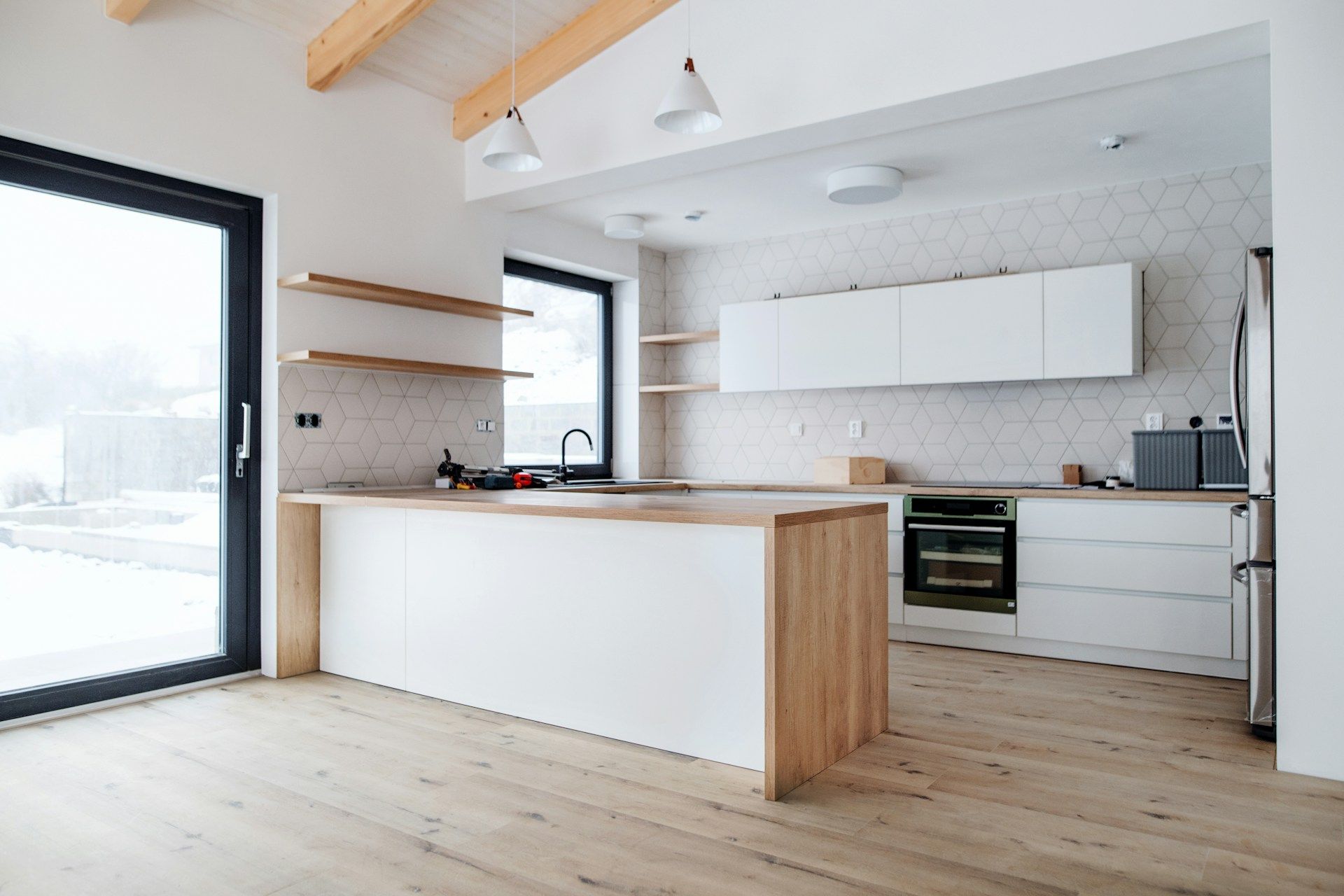
Custom wood and butcher block countertops are different from mass-produced pieces. With custom work, you get real hardwood, solid glue-ups, and layouts that fit your kitchen instead of forcing your kitchen to fit the product. You also get design freedom in wood species, thickness, edge style, and layout, from a simple run of counters to a bold kitchen island.
Early summer is a perfect time to plan a remodel, before fall gatherings and holiday baking take over your kitchen. When you choose long-lasting wood counters now, they have time to settle in before the busy season. The key is simple: design for longevity from the start, so warping, cracking, and cupping never get a foothold.
How Wood Moves and Why Countertops Fail
Wood is not still. It is hygroscopic, which means it takes in and gives off moisture from the air. It moves mostly across the grain, not along the length. In a kitchen with cooking steam, dishwashers, and open windows in the warm Virginia air, humidity goes up and down all year.
Common failure points often come from ignoring that movement. Some examples are:
- Warping when the top is screwed down too tight and cannot move
- Cracks starting at sink or cooktop cutouts where the wood is thin and stressed
- Glue lines opening where boards were joined with uneven moisture content
Different species move in different ways. Walnut, with its rich color, tends to be a bit more stable across the grain than some open-pored woods, but it still moves. Hard maple is dense and strong, yet it can move quite a bit if not dried and installed correctly. Oak and cherry have their own patterns of expansion because of their grain and pores. When we plan a top, we match the species and thickness to how it will be used, where it will sit, and what kind of humidity swings the home is likely to see.
Smarter Joinery Choices for Long-Lasting Tops
For a custom hardwood or butcher block countertop to stay flat, the glue-up strategy matters just as much as the final finish. Before we ever touch glue, we want all the boards at a consistent moisture level so they expand and contract together. Mixing a dry board with a wetter one is asking for trouble.
We pay close attention to:
- Board width, using narrower strips when we need extra stability
- Proper edge jointing so glue lines are tight and strong
- High-quality wood glue spread evenly along the joint
Reinforcement is helpful, but it should not lock the wood in place. Splines, tongue-and-groove joints, biscuits, or loose tenons can help keep boards aligned and reduce the chance of one board rising above the next. The key is that these reinforcements support the joint without fighting natural movement across the grain.
Special design features need their own strategies. For example:
- Mitered waterfall ends look clean and modern, but that long miter needs careful construction so the two directions of grain can move without tearing the joint apart
- Breadboard ends can help keep a wide top flatter, but they must be built so the center is pinned and the ends can float
- Large island overhangs must have support that moves with the wood and can handle people leaning or sitting along the edge
Done right, joinery acts like a quiet frame that guides the wood, instead of a cage that tries to stop it.
Grain Orientation That Fights Warping and Cupping
Grain orientation is one of the biggest tools we have for stability. There are three main styles in custom wood countertops:
- Face grain, where you see the wide face of each board and the grain pattern is very visible
- Edge grain, where the boards are turned on edge, making skinny stripes and better wear resistance
- End grain, a true butcher block surface, where you see the ends of many small blocks and get a very forgiving cutting surface
Face grain walnut makes a warm, elegant perimeter counter, but it needs correct support and finish to resist cupping. Edge grain maple, with its straight, tight grain, is popular for busy kitchen islands because it wears evenly and moves more predictably. End grain tops are thick and strong, and they tend to stay flat when they are built as one solid unit with careful joinery.
We also pay attention to how the growth rings run in each board. Alternating the growth ring orientation in a glue-up helps balance internal stresses, so one board that wants to cup is held in line by its neighbor. When possible, using rift or quartersawn boards, especially in walnut and maple, can cut down on seasonal distortion even more, because the grain is straighter and more uniform across the width.
Allowing for Movement in Real-World Kitchens
Even the best-built top needs the right installation so it can breathe. When we attach a countertop to cabinets, we never lock it down in every direction. Instead, we let the wood slide a little as it grows and shrinks.
Common methods include:
- Elongated screw holes in cabinet brackets so screws can shift with the top
- Figure-eight fasteners that pivot as the top moves
- Z-clips that grab the underside of the top while floating in a slot in the cabinet
Around sinks, ranges, and dishwashers, movement and moisture are both at play. We seal all cutouts carefully and avoid rigid connections that hold the wood in one spot while the rest of the top is free to move. Where the countertop meets a wall or backsplash, small expansion gaps are your friend. They can be hidden with flexible caulk or trim, yet still give the wood room.
We also think about:
- Overhang size on islands, balancing comfort and stability
- Where to place seams so they are not sitting right over a dishwasher vent or tight against a range
- Support brackets that are strong but do not block the underside of the top in a way that traps movement
These small decisions add up to a top that feels rock solid but is quietly moving a little all year long.
Caring for Walnut and Maple Tops Through Every Season
Good design and good care go hand in hand. A simple care routine keeps your custom wood countertops looking rich and smooth, even as they age.
On a daily basis, we suggest:
- Wipe with a soft cloth and a mild cleaner that is safe for wood
- Dry up spills quickly, especially around sinks and dishwashers
- Avoid leaving wet towels, plants, or soap bottles sitting in one spot
Finish choice also shapes how you care for the top. Penetrating oil or oil and wax systems are popular for walnut and maple, since they are easy to refresh when the surface looks dry. Film finishes, like certain varnishes, create a harder shell that offers more protection from spills but can be harder to repair in one small area.
Seasonal habits help too. In the humid Virginia summer, keeping air moving and running AC can limit swelling. In dry winter air, running a humidifier can help reduce shrinkage and small gaps. Trivets under hot pots, and separate cutting boards for heavy chopping, give your countertop a long, healthy life.
Now and then, it is smart to look across the top at eye level to spot early signs of cupping, check around sinks for darkened wood, and feel for any raised glue lines. Catching these small cues early makes repair much easier and keeps your top ready for years of cooking, homework, and family time around the island.
Get Started With Your Project Today
Transform your kitchen or workspace with handcrafted surfaces tailored to how you live and cook. At The Southside Woodshop, we work closely with you to design and build
custom wood countertops that match your style, layout, and daily use. Share your measurements, inspiration photos, and questions, and we will walk you through every step from material selection to final finish. Reach out today so we can turn your ideas into a one-of-a-kind wood countertop you will enjoy for years.
Share Article
Our Latest Spotlight!