
Choose Wood That Works as Hard as Your Kitchen
The best wood for countertops is not one single species. It depends on where that countertop lives and what it goes through every single day. A sink run has one kind of stress, a big island has another, and a home bar plays by its own rules.
Moisture, traffic, and daily tasks all change how woods like walnut, maple, white oak, and cherry behave. A walnut island can be a dream, but that same walnut right around a sink may ask for more care. At The Southside Woodshop in Portsmouth, Virginia, we design and build custom solid wood and butcher block countertops, and we spend a lot of time pairing the right species and finish with the right spot in the room.
Here, we will walk through how wood acts around sinks, on workhorse islands, and on home bars. We will look at pros and cons of popular woods, moisture risks by placement, and smart finish pairings that help your counters stand up to splashes, parties, and holiday cooking marathons.
How Wood Behaves Around a Busy Kitchen Sink
The sink run is the toughest job in the kitchen. Water sits, dishes splash, soap drips, and the air around the sink swings from dry heat in winter to thick humidity late in summer. Any wood here has to deal with movement, swelling, and staining from constant use.
Some wood species handle this harsh zone better than others. For sink runs, we usually steer people toward:
- Hard maple, with its tight, closed grain and good density
- White oak, which is dense, stable, and less likely to show staining quickly
- Walnut, when sealed with care, for rich color and solid stability
Hard maple and white oak shine here because their grain does not have large open pores. That helps slow down water getting into the wood surface. Walnut can work beautifully near sinks too, but it will ask you to be a little more mindful about standing water so the darker color stays even and rich.
The finish choice around the sink is just as important as the species. For most busy households, we recommend a film finish around sinks, such as a conversion varnish or similar catalyzed finish. A film finish sits on top of the wood and creates a shield against splashes. It is easy to wipe clean, and it buys you time when someone leaves a wet glass or a puddle by the faucet.
An all-oil finish near a heavily used sink is possible, but it asks for a different mindset. You will need:
- More frequent re-oiling to keep the surface sealed
- Regular checks for dry or dull patches around the faucet
- A habit of wiping up puddles quickly
Real-life care helps a lot around sinks, no matter the wood or finish. Simple habits make a big difference:
- Keep a dish rack or tray to corral drips
- Add soft silicone feet under soap dispensers and scrub brush caddies
- Wipe up standing water instead of letting it sit
- Plan a quick maintenance refresh after high-use seasons, like heavy summer entertaining or busy winter holidays
Best Wood for Countertops on Workhorse Kitchen Islands
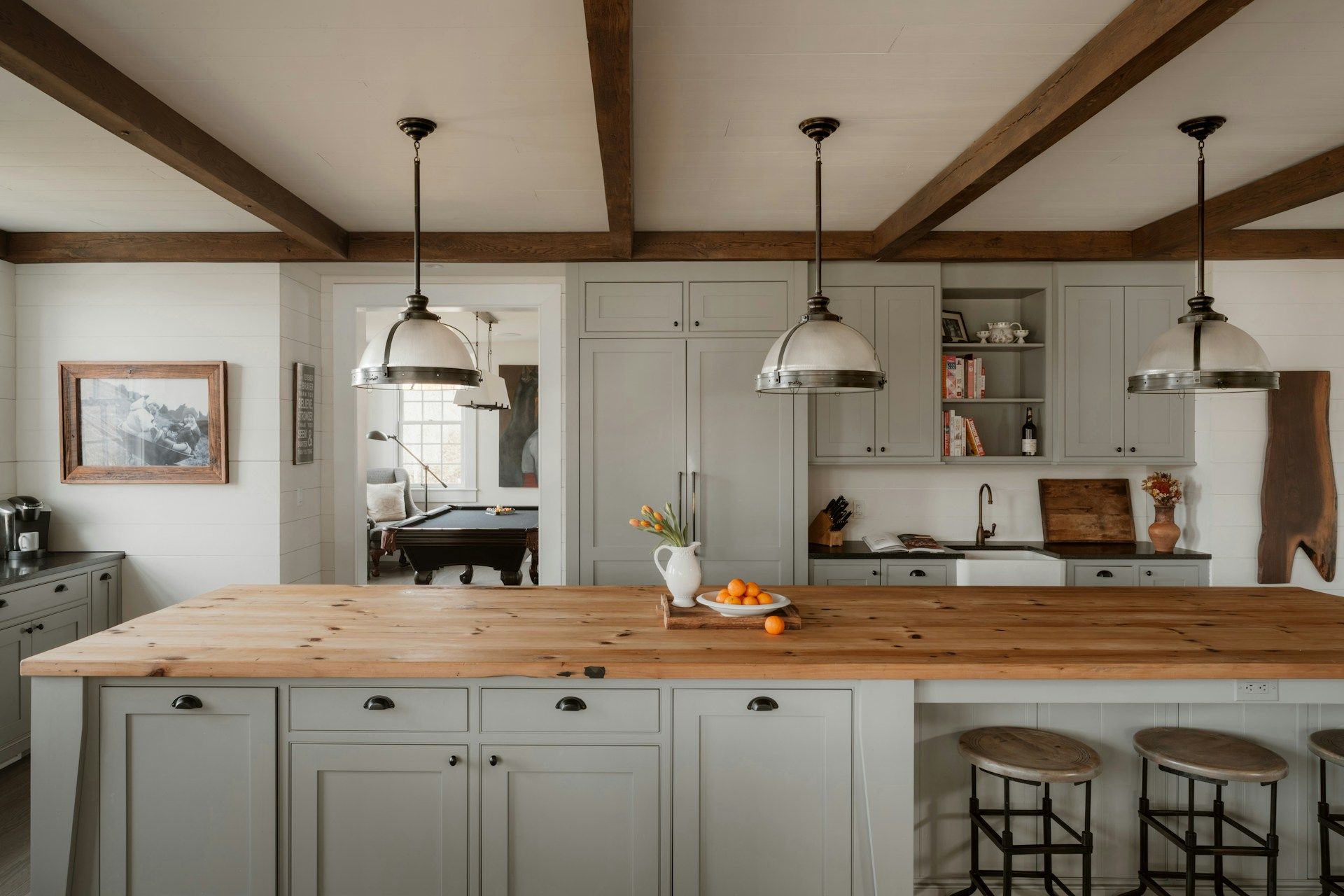
Kitchen islands are the multitaskers. One day they are a baking station, the next day they are a homework desk, then they turn into a buffet line for a cookout or a holiday spread. Some islands are true prep zones, while others are more about serving and seating.
For a true butcher block prep island, we often recommend:
- Hard maple as the classic, forgiving work surface
- Beech as a durable, stable option with a light, clean look
- White oak when you want hardness plus a little more grain character
These woods hold up well to knife marks, rolling pins, and daily chopping. In a food-forward prep zone, many people like an oil or oil-wax finish. These finishes soak into the wood instead of sitting on top, so they feel warm and natural. Knife marks and dings can often be spot-sanded and oiled, instead of needing a full refinish.
For multiuse islands where looks and warmth matter just as much as function, we tend to talk about:
- Walnut, for deep color and a dramatic grain that still feels soft to the eye
- Cherry, which starts warm and slowly deepens to a glowing patina over time
- Mixed species patterns, like maple and walnut together, for visual interest
If the island is more about serving, seating, or crafts than chopping, a protective film finish can be a strong choice. It helps guard against:
- Wine and juice spills
- Markers and glue from kids’ projects
- Water rings from cold drinks
Design details matter here too. Rounded corners and softened edges help in high-traffic kitchens where people brush by the island all day. Thoughtful overhang planning gives bar stools enough room without leaving a thin, fragile edge. The thickness of the top and the edge profile you choose can change both the durability and the style of the island.
Wood Choices That Shine on Home Bars and Pass-Throughs
Home bars and pass-throughs live a different kind of life. They see glasses, ice, and mixers. Condensation rings show up, and in many homes these tops get more direct sunlight and temperature swings, especially in open layouts or near large windows.
Here, we often look at woods that bring character and hold up to small dents and dings. Strong options for bar tops include:
- Walnut, for a rich, upscale look with grain that hides minor wear
- White oak, including quarter-sawn, for a refined, stable top that fits both modern and traditional spaces
- Ash or hickory, when you want a bolder, more rustic grain for a game room or basement bar
On bars, finish strategy is about fighting moisture, alcohol, citrus, and sugar. Highly protective film finishes are usually the best match. We often suggest a finish with a soft sheen so you still see the wood clearly, but glasses glide easily and cleanup after a party is fast.
To make bar tops last, small layout choices help:
- Use bar mats in mixing zones where ice and citrus live
- Plan a built-in drip area or a recessed section under ice buckets
- Wipe down the surface soon after parties or big game nights rather than the next day
Balancing Beauty, Maintenance, and Moisture Risk
The same wood can behave very differently in different spots. A walnut island away from the sink, used mostly for serving and light prep, can age gracefully with only modest care. That same walnut right up against a busy sink will look best if you are ready to wipe more often and commit to a strong film finish.
Hard maple tells a similar story. A maple butcher block prep zone with an oil finish is easy to refresh with a light sanding and fresh oil when it gets worn. A maple bar top with a film finish works better if the goal is to prevent drink rings and stains from dark liquids.
Oil and oil-wax finishes are great when you want:
- A natural, tactile surface for baking and chopping
- Simple, small-area repairs without stripping the whole top
- A work surface that can earn character over time
Film finishes shine when you need:
- Serious moisture and stain resistance around sinks and bars
- Fast, simple wipe-down after daily use or parties
- Extra protection in homes with lots of guests or active kids
Seasonal changes and lifestyle also play a part. Humid coastal air, like we see around Portsmouth, and busy summer and holiday hosting lead to more spills and movement. Choosing a slightly tougher finish or a species with good stability in your climate can cut down on future maintenance.
Custom details can also help manage movement and water, especially near sinks. Things like integrated drain boards, breadboard ends placed with care, and well-planned seams all help the wood do what wood naturally does while still keeping your countertop looking clean and intentional.
Plan the Right Wood Countertop for Every Zone
The smartest way to pick the best wood for countertops is to think in zones. Walk through your kitchen or bar and label each area in your mind: high water, high prep, serving, seating, or a mix. Each zone can then get the species and finish that fit its job.
A simple starting guide looks like this:
- High water and high mess, like sink runs and busy coffee stations: dense, stable species with a durable film finish
- Heavy prep zones, like butcher block islands and baking stations: hard maple or similar with an oil-based finish that is easy to refresh
- Showpiece and serving areas, like islands, peninsulas, and home bars: character-rich woods such as walnut or white oak with finishes chosen around how you truly use the space
At The Southside Woodshop, we match species, grain orientation, and finish choices to each layout, local climate, and maintenance comfort level. When every zone in your space has the right wood and the right finish, your countertops not only look beautiful, they work as hard as the rest of your kitchen or bar.
Get Started With Your Project Today
If you are ready to choose the right species, thickness, and finish for your new countertop, we are here to help you make confident decisions that fit your home and lifestyle. Explore what we consider the
best wood for countertops and see how each option performs in real kitchens. At The Southside Woodshop, we will walk you through the design and fabrication process so your custom surface is both durable and beautiful. Reach out to our team to discuss your ideas and get a clear plan for your project.
Share Article
Our Latest Spotlight!