
Maple Countertops: Choosing Grain (Edge vs. Face) and Stain-Resistant Finishes
October 11, 2026
Bring Warmth and Durability to Busy Fall Kitchens
Fall is when many kitchens get put to the test. More cooking, more guests, more big pots of soup and trays of cookies. All of that traffic shows you very quickly if your countertops can keep up or not.
Maple is one of our favorite woods for this busy season. It is strong, bright, and friendly, and it can be repaired when life leaves a few marks. In this article, we are going to focus on how to choose between edge grain and face grain maple, and how to pick a finish that stands up to stains but can still be touched up when needed. Our goal is to help you feel confident choosing the right maple countertop for how you really cook and live, not just how the photos look.
Why Maple Competes as the Best Wood for Countertops
When people ask about the best wood for countertops, maple is almost always in the conversation. There are some good reasons for that. Maple is a hard, dense hardwood with a tight, fine grain. That means it shrugs off a lot of bumps and everyday wear.
The light, creamy color is another big plus. It can:
- Brighten smaller or darker kitchens
- Pair nicely with white or painted cabinets
- Soften the look of darker bases like navy, charcoal, or black
- Work with both modern and classic styles
Compared with walnut, maple usually feels lighter and more casual. Walnut is rich and dramatic, but it can make a room feel darker. Maple keeps things airy, especially on large islands and long runs of counter. Next to white oak, maple often looks a little smoother and less rustic. Oak shows more grain lines and knots, while maple tends to look clean and calm.
In real homes, we see maple shine in:
- Busy family kitchens where snacks and homework all happen in the same spot
- Rental or second homes that get heavy weekend use
- Large entertaining spaces with islands that act like the main gathering zone
Maple is tough enough for daily life but still has that warm, natural feel that makes people want to stand around and talk.
Edge Grain vs. Face Grain Maple in Everyday Use
Once you settle on maple, the next big choice is how the boards are turned. This changes both the look and how the top behaves over time.
Edge grain tops are built from long, narrow strips of wood, with the edges of the boards facing up. That gives you:
- Slim, vertical grain lines that run the length of the countertop
- A simple, linear, almost modern look
- Very good stability on long runs of counter
- Strong resistance to wear along the surface
Edge grain is great around sinks, cooktops, and along straight walls. It handles a lot of daily wiping, sliding, and light chopping. If your main concern is smooth performance and less movement over time, edge grain is a smart pick.
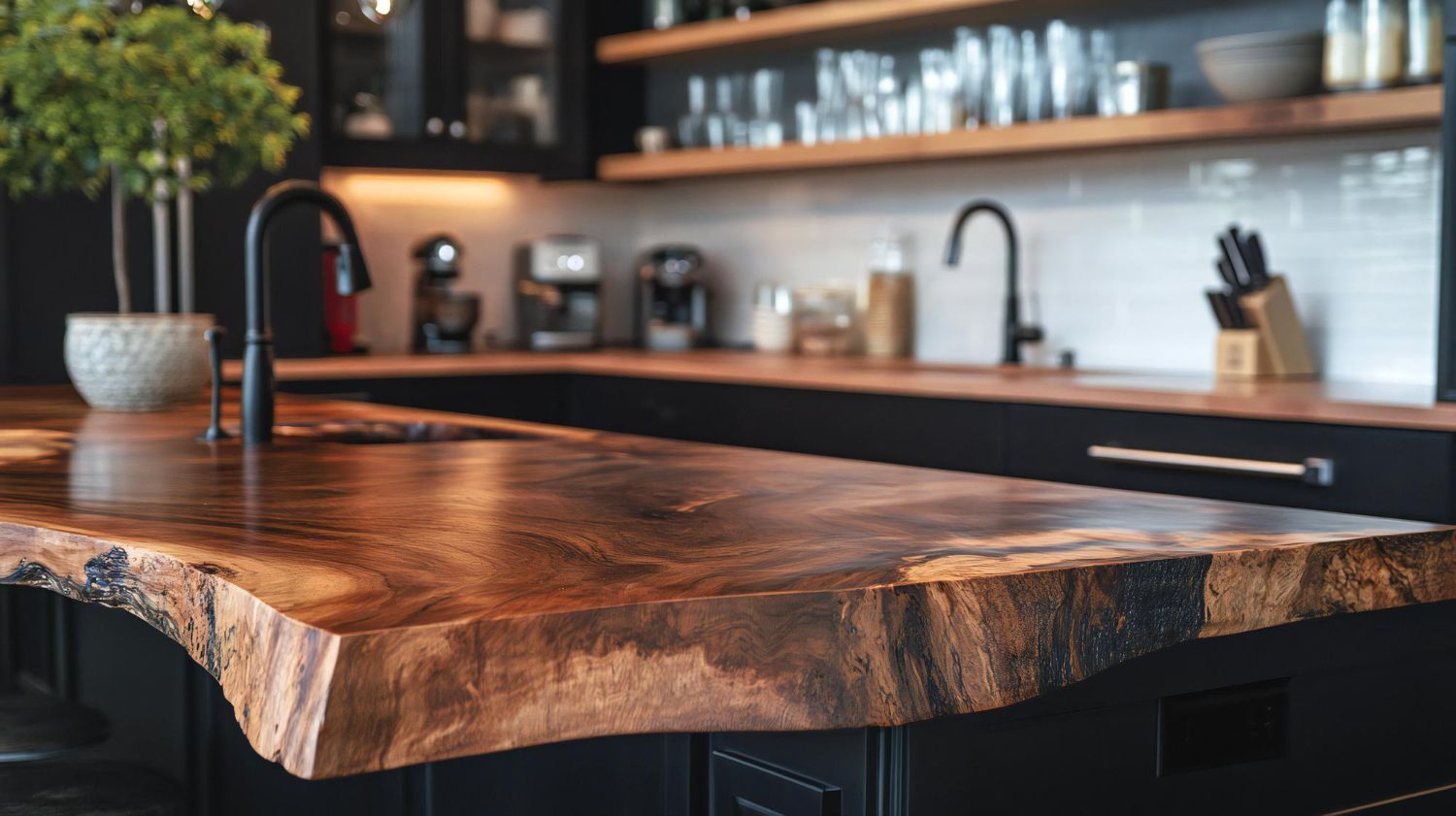
Face grain tops show the wide face of each board, the “top” of the tree. This style gives you:
- Wider grain patterns and more character
- A warm, furniture-like look
- A great fit for islands, peninsulas, and table tops
- Strong visual impact in open floor plans
Face grain maple can be a real centerpiece on a kitchen island or bar top. The grain patterns catch the light and make the wood feel rich and inviting. We often suggest a mix: edge grain around your hard-working perimeter counters, and face grain on the island where people gather, sit, and serve food.
Think about how you use each area:
- Main prep and cleanup zones: edge grain for strength and stability
- Casual dining and serving zones: face grain for beauty and warmth
- Long, straight runs: edge grain to limit movement and keep lines clean
- Standalone tops and tables: face grain to feel more like fine furniture
Finish Choices for Stain Resistance and Easy Repair
Grain is only half the story. Finish is what really decides how your maple handles stains, moisture, and future touch-ups.
Film-building finishes, like varnish or conversion varnish, sit on top of the wood and form a hard shell. They are often the best choice near:
- Sinks and dishwashers
- Trash pull-outs
- Coffee makers and drink stations
- Any spot that sees regular puddles or splashes
These finishes do a great job blocking water, wine, coffee, and sauce. The tradeoff is repair. Light wear can be polished, but deeper damage often needs a professional to sand and refinish the full section for a seamless look.
Penetrating oil or oil-hybrid finishes soak into the wood. They still protect, but they let you feel more of the wood under your hand. They are especially nice on:
- Butcher-block style prep areas
- Islands where people eat, craft, or work
- Bar tops and casual seating areas
Scratches and small stains are usually easier to sand and refresh with an oil style finish. That can be a relief during heavy fall and holiday cooking, when a quick touch-up between events can make a big difference.
You do not have to pick just one finish for the whole kitchen. Many homeowners plan by zone:
- Wet zones: film-building finish for maximum stain and moisture resistance
- Prep and dining zones: oil or oil-hybrid for easy spot repair and a softer feel
This mix lets each area do its job without forcing the same tradeoff everywhere.
Seasonal Care Tips to Keep Maple Countertops Holiday-Ready
Once your maple countertops are in place, day-to-day habits make a big difference, especially as the weather cools and indoor use ramps up.
Good daily habits include:
- Wiping spills promptly, especially coffee, tea, wine, and tomato-based sauces
- Using trivets or hot pads for pots, pans, and slow cookers
- Keeping cutting on boards instead of directly on the counter
- Avoiding standing water near undermount sinks and faucet bases
As fall settles in and the heat comes on, dry indoor air can affect any wood surface. A simple seasonal checklist helps keep things on track:
- Give seams and edges a close look for gaps or lifting
- Clean surfaces with a mild, wood-safe cleaner, not harsh chemicals
- Refresh oil finishes if the wood looks dry or “thirsty”
- Watch for tiny cracks around sink cutouts and high-use corners
One thing we like about maple is how its light tone and fine grain help hide small dings and scuffs. Minor wear often blends in until you are ready for a fuller refresh. When tops have seen very heavy use, a professional refinish can usually bring maple back to a smooth, fresh surface in time for guests.
Plan Your Custom Maple Countertop with Confidence
Choosing the best wood for countertops is really about how you live, cook, and gather. Maple gives you a wide comfort zone. You can choose edge grain where you need strength and stability, and face grain where you want warmth and drama. Then you match the finish in each zone to what that area deals with every day: strong film finish by the sink, more repair-friendly oil on the island or bar.
We always suggest thinking of your kitchen in zones, not as one single surface. Prep, cleanup, serving, and seating each have a job to do. When grain direction and finish are matched to each space, your maple countertops do more than look good, and they actually support how your home works through busy fall seasons and quiet weekday dinners alike. At The Southside Woodshop, we design and build custom maple, walnut, and other hardwood countertops and butcher-block style tops, shipped ready to install so you can get that mix of beauty, toughness, and repairability working in your own kitchen.
Get Started With Your Project Today
If you are ready to choose the
best wood for countertops, we are here to guide you through every step. At The Southside Woodshop, we listen to how you cook, entertain, and live so your countertop is tailored to your everyday life. We will help you compare species, finishes, and edge details so you can feel confident in your decision. Reach out to our team to discuss your ideas and get a personalized quote for your project.
Share Article
Our Latest Spotlight!